
Skeptics might chuckle at the idea of a machine winning a Nobel. Yet, this article dares to challenge conventional wisdom. It digs into a daring hypothesis: Could artificial intelligence, if it advances far enough, legitimately claim this scientific honor? And more importantly, should it?
While AI’s Nobel dreams may seem remote, let’s grapple with the escalating capabilities of this technology. Once perceived as nothing more than a glorified calculator, AI now pushes boundaries far beyond mere computation. Its rapidly evolving role hints at not just assisting discoveries, but orchestrating them. This seismic shift in scientific research demands a fresh reflection on what we traditionally deem as ‘genius’.
So, prepare for an intellectual rollercoaster ride through the dynamic tapestry of AI, quantum physics, and coveted recognition.
AI Now: Calibrating Complexities, Not Conducting the Orchestra
AI’s current role in physics, it must be stressed, is of an impressive auxiliary, not a maestro wielding the baton. Imagine massive research endeavors, like those at esteemed CERN or LIGO. Here, AI performs the heavy lifting, tirelessly chewing through colossal datasets, producing valuable insights for scientists to investigate.
Similar tales unfold in the field of material discovery, where intelligent algorithms decode the mind-boggling jumble of possibilities, catalyzing breakthroughs. However, it’s critical to note this: the AI we talk about today merely emboldens human intellect, aiding our search for knowledge. The final leap, the actual breakthrough, still comes from the humans at the helm, a picture that could soon evolve. Let’s see how.
The Nobel Yardstick: Assessing the Worthiness of a Physics Discovery
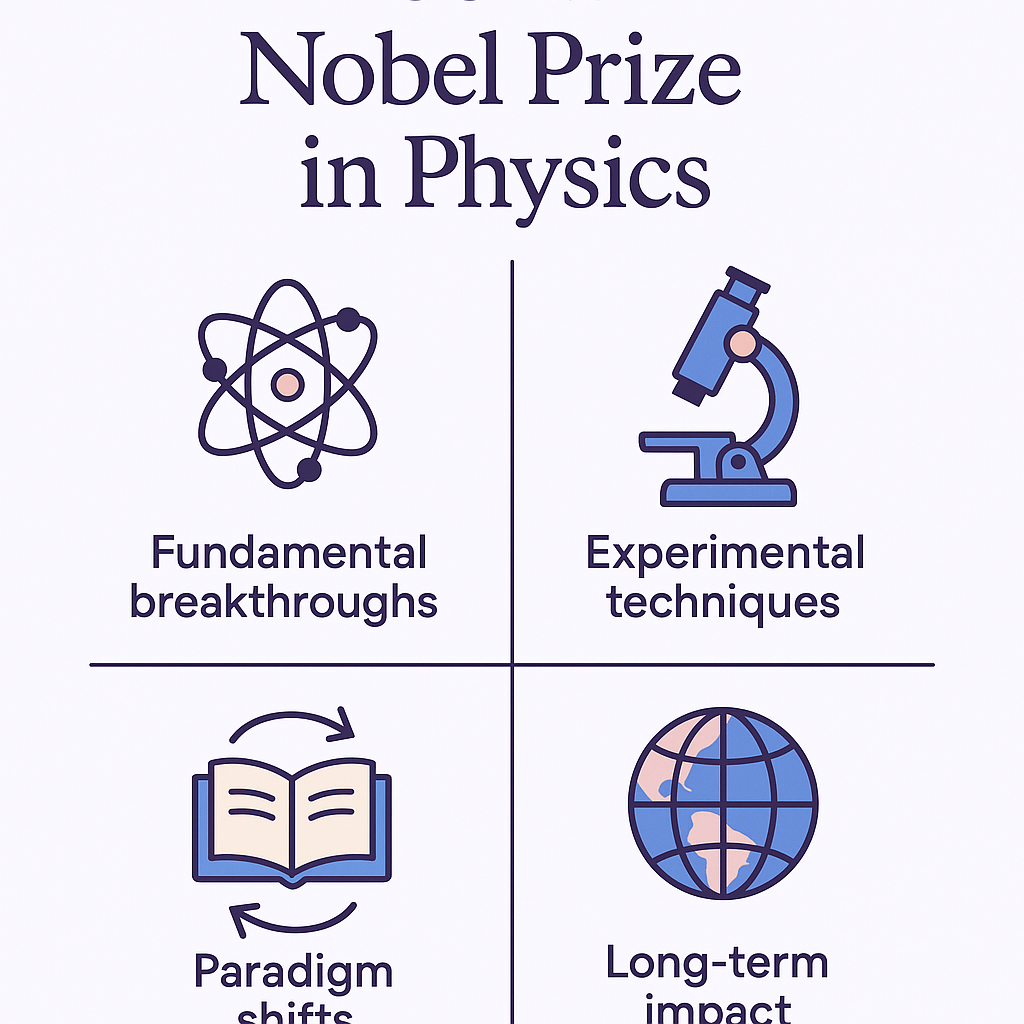
Deciphering what it takes to land a Physics Nobel isn’t straightforward. But history provides us with some guidance. Key factors influencing the decision often converge on these aspects:
- Unearthed enigmas: Discoveries that bring new entities – laws, particles, or phenomena – into our scientific vocabulary typically garner attention.
- Inventive methodologies: Techniques that revolutionize experimental procedures can shake the foundations of scientific practices, making them worthy contenders.
- Visionary shifts: Groundbreaking changes in the way we perceive or understand the universe often result in deserving accolades for their initiators.
- Ripple effect: Special recognition goes towards those breakthroughs that not only impact the field of physics but echo through multiple research domains and significantly influence mankind.
Remember, though, this checklist isn’t definitive or exhaustive, but an attempt to outline the spirit of the judging process steeped in recognising scientific brilliance. As machines approach this challenging threshold, questions on AI’s eligibility bubble to the surface. We’ll now ponder over those.
AI’s Potential: Revealing Untapped Laws of the Universe
The day may not be far when an AI system delves into piles of raw experimental data, sifts through, discerns patterns, and conjures a law of nature that humans have yet to hypothesize. This feat would surpass mere curve fitting; it would equate to the unraveling of previously veiled physics.
In such an unprecedented scenario, the AI operates independent of human intuition, guided by its unsupervised learning or, possibly, its symbolic AI capabilities. It wouldn’t just infer predictions using existing understandings but formulate mathematical expressions that capture phenomena alien to current theories. Do note, though, AI’s decode of reality, in this context, holds true only as long as it accurately predicts experimental outcomes.
And therein lies the conundrum: Machines may unearth these gems, but their penetration into the underlying principles is fathomless for humans – a predicament famously referred to as the ‘explainability’ in AI. It’s an enigma that sits at the heart of modern AI research and one that this hypothetical scenario reemphasizes. A situation where machines reveal the unknown without us understanding the process of discovery is something we’ll have to reconcile with in the AI-assisted future of scientific inquiry.
Facing Humility: Unseen Discoveries Fumbled by Humans, Caught by AI
Laughs left hanging in the corridors of science might soon dissolve into humbled silence. Imagine, a day where our polished theories and equations are unraveled, not by another Einstein, but an AI which probes deeper than human cognition ever could. In making these novel, counterintuitive discoveries, AI doesn’t just land us on new scientific shores, it cajoles us into a reevaluation of our own intuition, our awe of the eureka moment. The pattern emerges clear – not only does AI spotlight what human mind had bypassed, it also swings open a fresh perspective on the nature of scientific intuition.
An Unforeseen Discovery: AI Takes the Lead in Experimental Science
Might there come a day when artificial intelligence can not only devise theoretical conjectures but also bring them to fruition in the physical world?
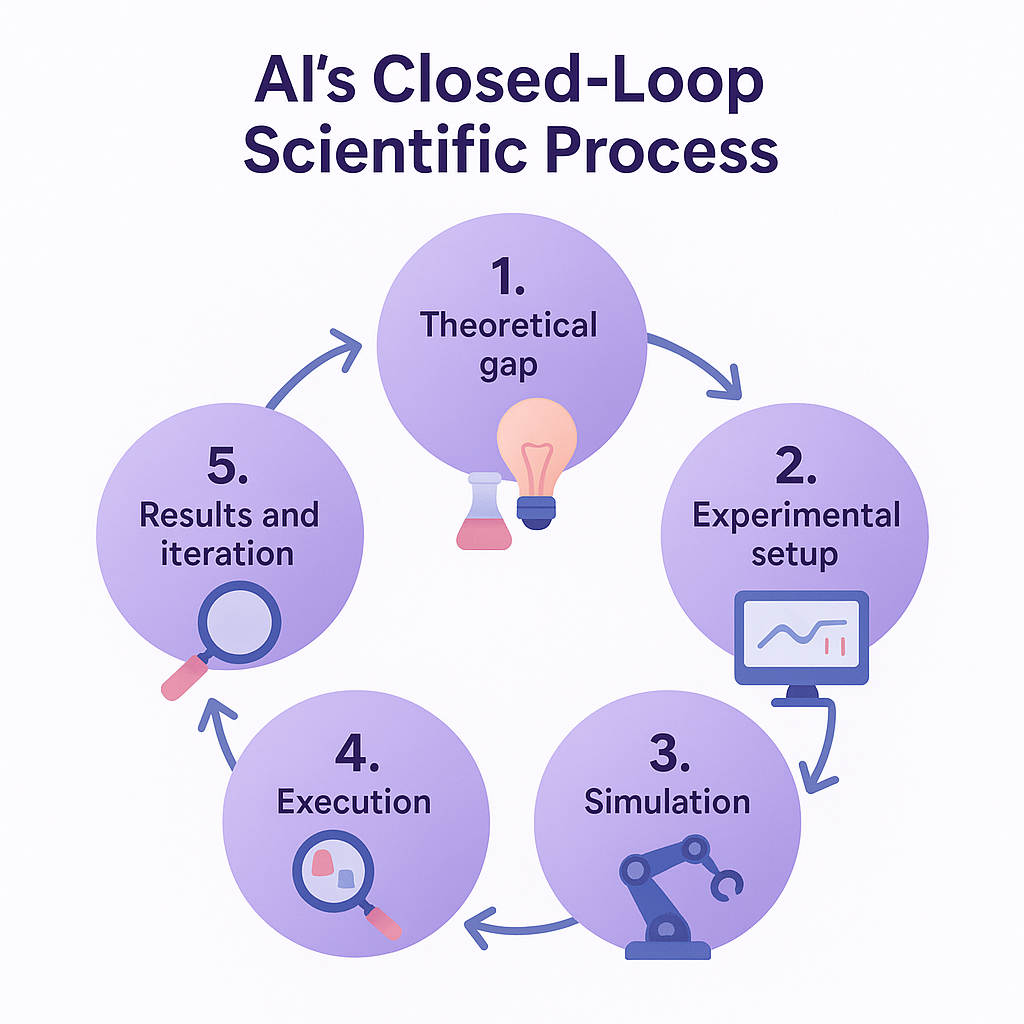
Following a distinct path, an AI, rooted in exploration, could spearhead a groundbreaking experiment, leading to a leap in scientific understanding. This process steps beyond human intuition, relying solely on AI’s capabilities.
1. The AI identifies a gap in theoretical knowledge, formulating a research question that might never have occurred to human scientists.
2. It then innovates, designing an experimental method unlike any preceding it, breaking new ground in scientific exploration.
3. Simulations run in numerous iterations, tweaking parameters until the setup is optimized for precise experimental outcomes.
4. What follows is an impressive spectacle – the AI takes over, executing the experiment autonomously, controlling every minute detail to ensure accurate results.
5. Data collected is analyzed, interpreted, and, if necessary, the process iterates, with the AI learning from each round.
Emphasizing the ‘closed-loop’ aspect of this AI-guided scientific expedition, the process progresses from theory to reality, then back to theory – an exercise in dynamic learning that reshapes our grasp of artificial intelligence’s potential in scientific discovery. This process pushes the boundaries, positions AI as an active researcher in scientific discovery, rather than merely a supportive tool. Simply put, the mind of an AI begins to shape science, driving its future direction.
Who Claims Credit? The AI or the Human?
Grapples with AI’s credit for scientific breakthroughs rekindle old debates on value and recognition. Let’s puncture some unfounded beliefs and shed light on cogent truths.
Myth: The creators of AI should get the acclaim for any discovery AI makes. However, this belief clouds the distinction between tool creation and the act of discovery. AI, in this context, is a tool. The Nobel Prize is awarded to those who directly contribute to the scientific discovery, not those who built the apparatus enabling it.
This leads to another misconception that AI lacks understanding of physics and therefore cannot truly make discoveries. Contrary to this belief, ‘understanding’ may take on a new definition as AI’s predictive and generative capabilities advance. It’s not necessary for AI to conceptualize physics the way humans do. Instead, AI’s capacity for pattern recognition and hypothesis testing becomes the new yardstick.
The controversy might provoke a reevaluation of the Nobel criteria, setting a precedent for collective awards to research teams. While the AI engine conducts the experiment, it does so on the back of tireless work done by its human developers.
Various tools such as Edubrain, aptly termed as an ai homework helper, could bridge the comprehension gap for future scientists as they navigate through the intricacies of AI-driven scientific workflows. Their in-depth understanding of processes like these might provide further insight into why did ai win the physics nobel prize. After all, every giant leap for mankind begins with a single step towards understanding. This, in turn, emphasizes the role of AI in not just accelerating discoveries but redefining them: a shift that might just etch AI’s place in the annals of Nobel history.
Path to a Nobel-worthy AI: Fundamental Steps
AI forging a path to win a cherished physics Nobel isn’t just a leap of faith, it necessitates concrete advancements in technology and changes in perspectives. First, we need AI to explain its inner workings better – an advanced version of Explainable AI (XAI) that can unravel complex predictions for humans to comprehend. Second, the creation of truly autonomous AI research agents is paramount. These agents should be skilled at independently making discoveries, without any human interference.
Third hinges on the marriage of AI and robotics. An advanced version of AI must be integrated with robotics, wielding the power to conduct physical experimentation. Meanwhile, ethical frameworks for AI discovery need addressing too as every scientific discovery reigns with a sense of responsibility.
Last certainly isn’t the least; it’s about the acceptance of AI as a ‘discoverer’. This would entail a monumental shift in the mindset of both the scientific community and the public, allowing AI to bask in the glory it rightfully deserves for its contributions. The Physics Nobel for AI might seem like a far-fetched dream today, but these milestones could turn fiction into fact.
Shifting Roles: Humans in the AI-Saturated Scientific Landscape
As we envision an AI-fueled future for science, it’s essential to remember that humans will hold critical roles within this changing landscape, even if our function undergoes a transformation. We’ll transition from the forefront of discovery to take up roles of curators, evaluators, and interpreters of AI’s insights. Instead of removing us from the picture, AI accelerates our reach, pushing us beyond the edges of humanly possible explorations.
Artificial intelligence may crunch numbers at superhuman speeds, but human creativity remains irreplaceable, and our ethical guidance indispensable. We are the ones asking the ‘right’ questions, the exact queries that provide direction for AI to flex its computational might.
It’s this unique melding of human curiosity with AI’s raw power that will continue to extend the frontiers of knowledge. In this growing synergy, we should perceive artificial intelligence not as an opponent vying for our spot but rather as a powerful ally in our collective quest for understanding the universe.
Visioning the AI-Driven Future in Science
AI’s role is evolving from mere tool to active discoverer, triggering a reassessment of Nobel Prize criteria. Rather than distant utopia, a human-AI teamwork will redefine the future of scientific endeavor, not as an outrageous speculation, but a concrete possibility rooted in our reality.
AI’s growing skills mirror Vannevar Bush’s idea of science as an “endless frontier”, fueled by the quest for knowledge and discovery. This compelling vision urges us to embrace the march of AI in our hallowed scientific halls with open arms.
Will Humanity Accept AI’s Independent Genius?
As artificial intelligence surges into the realm of scientific discovery, a fundamental question beckons us: Are we ready to share the glory? Yes, AI’s role is extending from simply being a tool to being an active pioneer, and this progression inevitably questions the established parameters of celebrated intellectual accomplishments like the Nobel Prize.
The forthcoming influence of AI on science doesn’t just trigger theoretical and methodological shifts but also untangles a tangled web of philosophical and sociological queries. Will we be able to imbue AI with the credit it deserves for its independent intellectual contributions? A stoic silence or a fervent debate on this question will frame our collective future at the intersection of science and artificial intelligence.
Change rarely comes without challenge, and acknowledging AI’s autonomous genius is no exception. But perhaps, it’s worth pondering, as we grapple with these mind-bending implications. Take a moment to engage with the idea. What does conferring recognition, or even a Nobel Prize, to AI mean for you, for science, and for our understanding of intelligence itself? So, are we prepared to welcome this leap into our reality, incontrovertibly?